

In short
- The short answer: in our data, people kept the most answers from Claude Opus 5.5 for writing (27%), teaching (38%) and study (31%), and from OpenAI GPT-6 Astra for coding (25%).
- Writing and documents, coding and teaching are the three biggest jobs people bring to the chat: together, 60% of the text conversations we classified in late September.
- Below are six real cases, each solved by a different model. The people are illustrative; the jobs and the answers come from real conversations. Every case ends with “Repeat this case”, which opens the chat with the same model and a ready prompt.
- TryChatGet is a web app that puts AI chat and image models from several providers in one place. You pick a model or let Auto choose. It is independent and not affiliated with the model providers.
Six real jobs, and the AI model that solved each
Each case comes from a real TryChatGet conversation where the person kept the answer: they copied it, downloaded it, shared it or liked it. We changed the details and the people are illustrative.
Illustrative people, real cases. Answer excerpts are from the real answers, translated into English where needed, with personal details replaced.
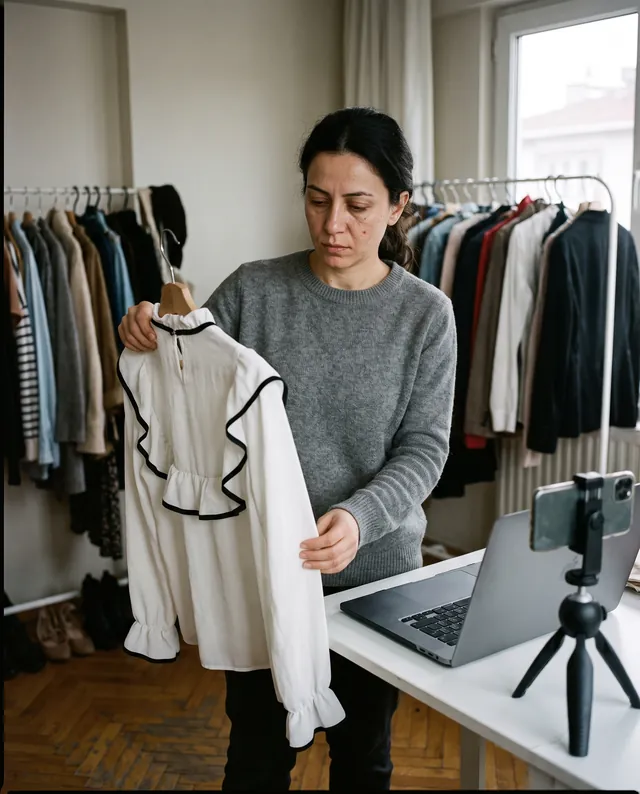
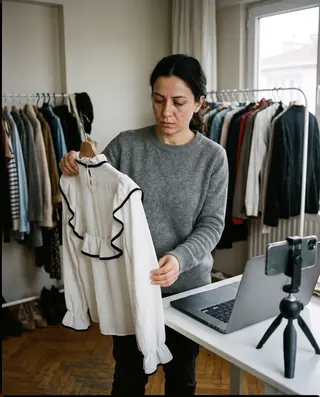
Elif, 33: Writing product descriptions with AI
Runs an online clothing shop · Bursa, Turkey
ProblemEach new item needed a description, and writing them ate her evenings.
Elif sells women’s clothing online from a small home studio. Every new item needs a title, a description and a fabric list before it can go live. She typed the basics of a sleeveless ruffled blouse and its fabric mix, and got a ready-to-paste description in a tone that fits her shop.
Case solved by OpenAI GPT-5.5What she typedDescription for a ruffled blouse
[Store name]: Women's Ruffled Blouse Combining elegance and comfort, this sleeveless blouse adds a feminine touch to everyday outfits with its graceful ruffle details. The white and black details make it easy to wear with both casual and dressy looks. Fabric: 65% viscose, 33% polyester, 2% elastane.
Write a ready-to-paste product description for my online shop: [item], [colors and details], fabric [percentages]. Give me a title, two short paragraphs, five feature bullets and the fabric list.
Also good for titles, tags and marketplace listings

Andrés, 41: Speeding up a Google Apps Script with AI
Bookkeeper at a hardware store · Medellín, Colombia
ProblemHis invoice script worked, but it crawled through invoices one by one.
Andrés keeps the books for a small hardware store. He had built a Google Apps Script that pulls supplier invoices from email and logs them in a spreadsheet, but it handled them one at a time. He pasted it in and asked how to make it faster, fully automatic and still free.
Case solved by Claude Sonnet 5.5What he typedMake my invoice script faster
My recommendation is not to switch platforms but to rewrite the slow part of the code. Apps Script is the only free place with direct access to Gmail, Drive and Sheets, with no OAuth or servers. Why it is slow: everything is sequential, one invoice and one call at a time. Parallel calls (the biggest speed gain): UrlFetchApp.fetchAll sends several requests at once.
Here is my Google Apps Script that logs supplier invoices from email into a spreadsheet: [paste your script]. It is slow. Make it faster and fully automatic, keep it free, and explain each change.
Paste your own script where the brackets are
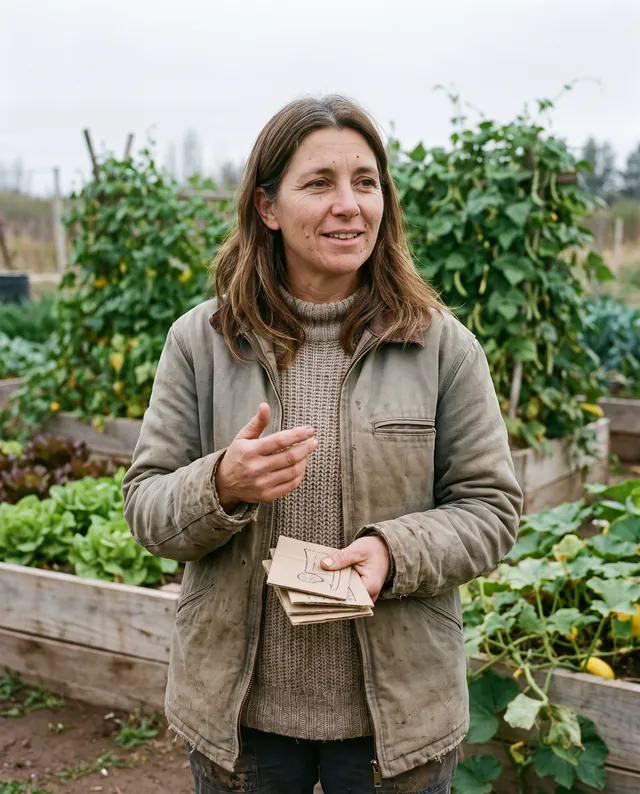
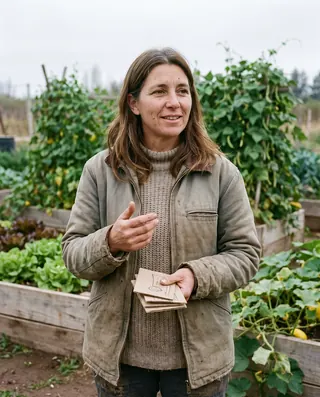
Mónica, 44: An AI lesson plan for a crop rotation game
Agriculture teacher · Mendoza, Argentina
ProblemShe needed an 80-minute crop rotation lesson that wasn’t another quiz.
Mónica teaches the school-garden subject at a technical agricultural school. Her class had one 80-minute block for crop rotation, and she wanted students to reason, not memorise. She asked for a game with a story, three levels, team roles and a real check at the end, using only chalk, cards and cardboard.
Case solved by Claude Opus 5.5What she typedGamify a crop rotation lesson
Level 1, “Read the terrain” (15 min): teams sort cards of local crops by botanical family, and as heavy feeders, soil restorers (legumes) or light feeders. Level 2, “Build the sequence” (20 min): on a bed drawn in chalk or on cardboard, order 4 crops that never repeat a family in consecutive cycles. Rule: every decision must be backed by an agronomic reason. A move without one scores no points, even if it is correct.
Design an 80-minute gamified lesson on [topic] for [grade]: a story, a mission, three timed levels, team roles, points, feedback and a real check of learning at the end. Low-tech materials only, and every move must need a reason.
Also good for rubrics, worksheets and review games
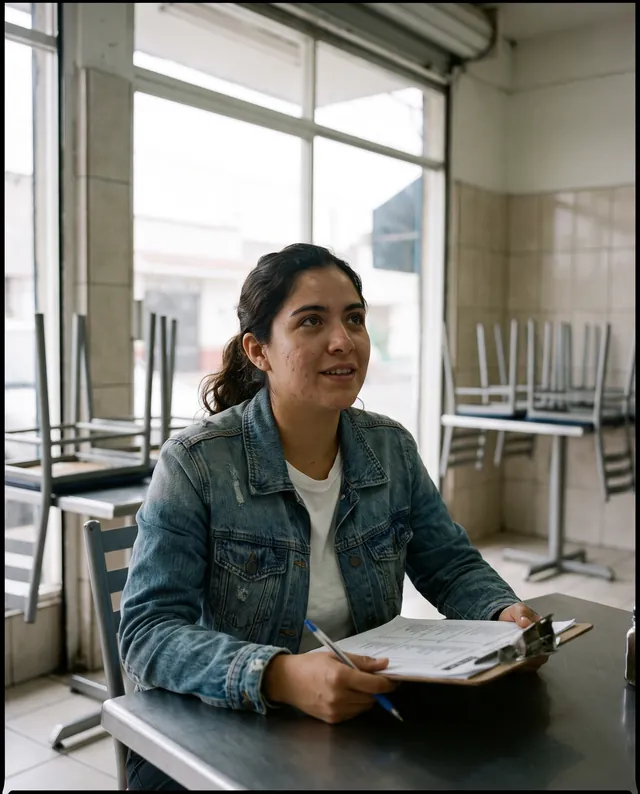
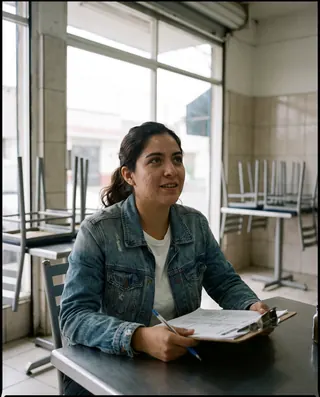
Valeria, 23: Questionnaires for a restaurant audit
Business administration student · Guadalajara, Mexico
ProblemShe had to audit a real restaurant and didn’t know what to ask whom.
Valeria’s course asked each team to diagnose the external environment of a real company. Hers was a 15-person seafood restaurant. She needed questionnaires for the owner, the staff, the customers and the suppliers, plus a simple way to decide which findings mattered.
Case solved by Grok 4.7What she typedSurveys for a restaurant audit
Here is a set of questionnaires to diagnose the external environment of [the restaurant] (seafood, 15 employees). They don't measure the internal climate; they capture what the environment imposes or offers: customers, competition, suppliers, regulation, economy, technology and community. Priority = impact × probability. A score of 16 to 25 goes into the plan; 9 to 15 is monitored; 1 to 8 is recorded.
Design questionnaires to diagnose the external environment of [type of business, size]: one for each role, plus customers and suppliers, with a 1 to 5 scale and a simple way to prioritise the findings.
Also good for SWOT analyses and customer surveys
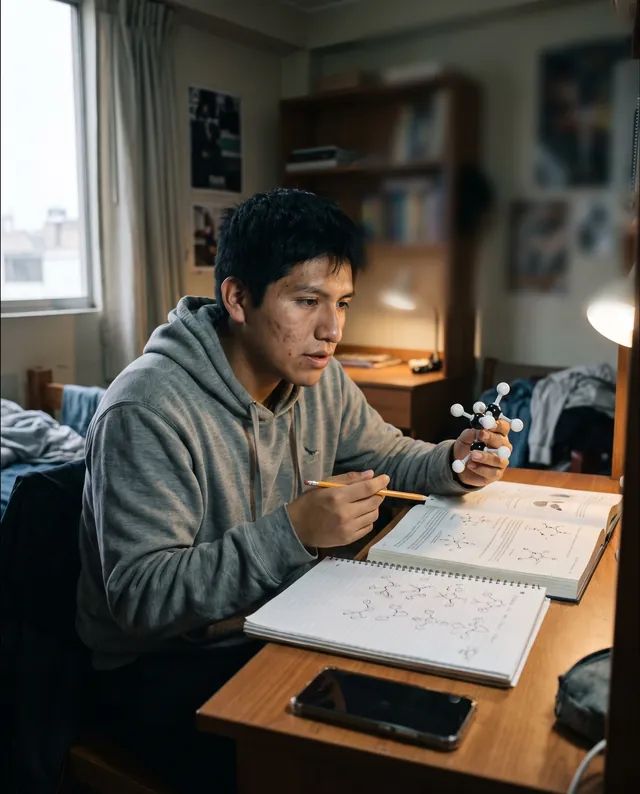
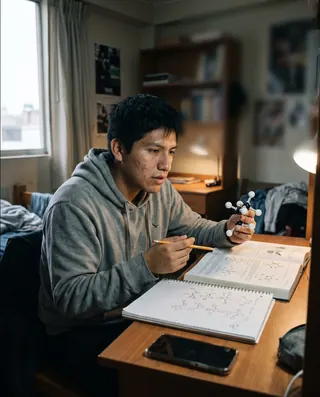
Mateo, 19: Learning Lewis structures step by step
First-year civil engineering student · Lima, Peru
ProblemHis chemistry midterm covered Lewis structures, and the book skipped the steps.
Mateo is in his first year of civil engineering, and chemistry is the course he worries about. He asked for chemical bonds explained simply, then came back a few minutes later for the next topic: how to draw Lewis structures, step by step. He left the model on Auto, which picked DeepSeek V4 Flash for him.
Case solved by DeepSeek V4 FlashWhat he typedHow do I draw Lewis structures?
Steps to draw a Lewis structure: 1) count the total valence electrons; 2) pick the central atom (the least electronegative); 3) join the atoms with single bonds; 4) place the remaining electrons as lone pairs; 5) check the octet, forming double or triple bonds if short; 6) check formal charges. CO₂: C has 4 valence electrons and each O has 6, so 4 + 12 = 16 → O=C=O. The double bonds complete every octet, and all formal charges are 0.
Teach me how to draw Lewis structures step by step, with two worked examples, then give me three practice molecules with the answers at the end.
Opens DeepSeek V4 Pro, the DeepSeek model in TryChatGet today

Linh, 31: Spreading a sales target across a spreadsheet
Sales planner at a packaging distributor · Ho Chi Minh City, Vietnam
ProblemA 700-tonne target had to be split across every customer and month.
Linh plans sales at a packaging distributor. Management set next year’s target at 700 tonnes, and she had this year’s volumes by customer, month and product in one big sheet. She attached it and asked for the target spread across all of them in the same proportions.
Case solved by Gemini 3.1 ProWhat she typedSplit a 700 t target by customer
I took the following steps: 1. Located this year's actual sales by customer, month and spec in your sheet (about 485,358 kg in total). 2. Calculated the ratio needed to reach 700,000 kg next year (a multiplier of about 1.4422). 3. Applied it to each customer's monthly volumes, so next year's forecast keeps the same proportions across all months and specs.
I'm attaching my sales sheet with this year's volumes by customer, month and product. Spread next year's target of [total] across them in the same proportions and give me the updated table.
Attach your own sheet before you send
What people use AI chat for
Share of text conversations by job, as labelled by our own use-case classifier, 22 to 30 September 2026. Pictures have their own guide: what an AI image generator can do.
- 23%Writing and documents1,303 conversations
- 20%Coding1,094 conversations
- 17%Teaching964 conversations
- 10%Business534 conversations
- 9%Study488 conversations
- 8%Personal420 conversations
- 7%Academic papers374 conversations
- 3%Translation141 conversations
- 2%Spreadsheets and data135 conversations
- 2%Career and CV116 conversations
5,569 text conversations the classifier could place, 22 to 30 September 2026. Image requests and conversations without a clear job are left out.
Which AI is best for each job?
The short answer from our data: Claude Opus 5.5 for writing, teaching, business and study, OpenAI GPT-6 Astra for coding, and a near tie between two Claude models for academic writing. Each card shows the models behind the answers people kept, 16 to 30 September 2026.
Best AI for writing and documents
Claude Opus 5.5 wrote 27% of the 338 writing answers people kept.
| Model | Share |
|---|---|
| Claude Opus 5.5 | 27% |
| Claude Sonnet 5older | 21% |
| Gemini 3.8 Flash | 9% |
Best AI for coding
OpenAI GPT-6 Astra wrote 25% of the 314 coding answers people kept.
| Model | Share |
|---|---|
| OpenAI GPT-6 Astra | 25% |
| Claude Opus 5.5 | 21% |
| Claude Sonnet 5older | 19% |
Best AI for teaching
Claude Opus 5.5 wrote 38% of the 212 teaching answers people kept.
| Model | Share |
|---|---|
| Claude Opus 5.5 | 38% |
| Claude Sonnet 5older | 16% |
| Gemini 3.8 Flash | 13% |
Best AI for business tasks
Claude Opus 5.5 wrote 21% of the 162 business answers people kept.
| Model | Share |
|---|---|
| Claude Opus 5.5 | 21% |
| Claude Sonnet 5older | 17% |
| OpenAI GPT-6 Astra | 15% |
Best AI for academic writing
A near tie: Claude Sonnet 5 wrote 28% and Claude Opus 5.5 26% of the 149 academic writing answers people kept.
| Model | Share |
|---|---|
| Claude Sonnet 5older | 28% |
| Claude Opus 5.5 | 26% |
| Gemini 3.8 Flash | 11% |
Best AI for studying
Claude Opus 5.5 wrote 31% of the 127 study answers people kept.
| Model | Share |
|---|---|
| Claude Opus 5.5 | 31% |
| Claude Sonnet 5older | 13% |
| Claude Opus 5older | 13% |
Shares count answers people kept, so they also reflect which models people pick most often. Claude Sonnet 5 and Claude Opus 5 are older models that are no longer in the menu. Model names belong to their providers. How we measured.
How we measured
- Kept answer. The first time someone copies, downloads, shares or gives a thumbs-up to an answer in a conversation. Copies and thumbs-up are only counted when the visitor accepts analytics cookies, so every count here is a lower bound.
- Model. The model that wrote the kept answer. When someone chose Auto, we count the model that Auto picked.
- Job. Our use-case classifier gives each conversation one job. The job mix covers 5,569 text conversations from 22 to 30 September 2026; image requests and chats without a clear job are left out.
- Model table. 1,782 kept answers with a job label, 16 to 30 September 2026. We show jobs with at least 100 kept answers.
- The six cases. Conversations where the person kept the answer. We read them, replaced personal details, translated excerpts into English and told each one through an illustrative person.
What this data can’t tell you
- A kept answer shows that someone found it useful. It is not a check that the answer was correct.
- Popular models collect more kept answers. A per-model success rate needs more data than two weeks give us, so we don’t publish one.
- Most of our users write from Türkiye, Latin America and Southeast Asia. Other groups may choose differently.
- Model line-ups change every month. We update these numbers monthly.
Questions people ask
Is TryChatGet the same as Claude, ChatGPT or Gemini?
No. TryChatGet is an independent workspace that gives you access to AI models from several providers in one chat. We are not affiliated with, endorsed by, or owners of these models. The cases on this page name the model that wrote each answer inside TryChatGet.
Which models can I use?
The model menu in the chat lists every model that is live today, with Auto as the default. The list changes as providers release and retire models.
Can I switch models in the middle of a conversation?
Yes. Pick another model from the same menu and send your next message; the conversation keeps its history.
Are these real users?
The jobs and the answer excerpts come from real conversations where the person kept the answer. The people, names and portraits are illustrative, and personal details in the excerpts were replaced.
Do I need an account?
You can start without one. Paid features need Pro, a subscription that renews until you cancel; prices are on the pricing page.
Where do the numbers come from?
From our own product analytics: the use-case classifier for the job mix and kept answers by model for the table. The definitions, dates and limits are under How we measured. We update them monthly.